

Like many people who rely on companies for data storage, I pay monthly fees to google for storing in the cloud. Up until a few years ago, there was something reassuring in the metaphor of the cloud and its many “servers” humming away to protect my documents and videos. In taking the scenic drive from Portland to Mount Hood, I would drive by the boxy structures that were the actual “clouds.” But they blended into the American landscape of strip malls, industrial parks and warehouses circling the city. They were far enough away from the dynamism of the city and the wildness of the forests and the mountain that these buildings may as well have been in celestial spaces.
These data centers were part of what seemed normal in our relationship to computer technology. Until they weren’t. Like a sci-fi film, massive black window-less boxes were popping up across the country. Like with any alien invasion, people get curious about what’s inside these strange structures.
Why are they sucking up vast amounts of water and electricity? Why are they producing that eerie hum day and night? Why are there no people in them? Experts tell the public that these super-structures are necessary to power the AI revolution. If we don’t do this, they say, we will get left behind. We need it to power the world we all depend on.

Some experts debate whether or not this advanced form of computer learning-–hyperscalers, agentic AI, autonomous AI, superhuman AI–is a normal technology. The tech mega-billionaires and their marketing people can’t seem to decide. One story leans into the abnormal: this technology is more powerful than anything in human history–or maybe since the atomic bomb–and it could destroy all of humanity. More likely, others argue, it will just take away your jobs. But they breathlessly add that US tech companies are best positioned to control these bad outcomes. That’s why they have to keep their technology so secret. The other story leans into the idea of normalcy: people always get scared by something new that they don’t understand but they then adjust and find that it’s not so scary after all. It’s normal and you are normal for being afraid of something you don’t understand. People will find new jobs or enjoy their leisure time.
Normal vs. Abnormal
As an academic who taught Abnormal Psychology for decades, I have engaged my students in analyses of how boundaries between normal and abnormal get drawn. In psychiatry and psychology, there are experts whose job it is to establish such boundaries and for establishing scientific criteria for inclusion and exclusion. For those of us who draw on critical traditions in psychology, these boundaries have long been suspect. Social movements, including feminism, cultural studies, queer theory, disability advocacy, the anti-psychiatry movement, have for decades unsettled experts’ claims on the inclusivity or exclusivity of their categories.
In returning to whether or not AI is a normal technology, there are many ways of thinking about this question. Discourse on AI normalcy tends to center on how this technology will be gradually accepted by the public through a process termed diffusion. In coming years, AI will be integrated into our work processes, our mental states, and our economy. This also draws on a continuum model where things familiar that we already accept–automated transcription services, google search functions and automated call centers–will extend into new areas as AI technology automates routine work and provides better computational tools for science and medicine. There is certainly something to this story. It’s compelling if we push out of mind the parts of the AI story which the material horrors of data centers so palpably remind us of.
Alongside this continuum model of normalcy is the major disruption model (also normal). The most common historical examples are the steam engine and railroads in the mid 19th century, the light bulb and electrification in the late 19th century, and the world wide web and the internet at the end of the 20th century. These were transformative technologies that produced public anxieties and economic crises. But many promoting the normalizing discourse point out that such disruptions were merely phases in a general pattern of historical progress. The public finally matures and adapts to the technology, relinquishing out-moded ways of thinking and making things.
Those who defend AI as normal (versus perversely abnormal) often talk about this technology as if it were a highly gifted but wild teenager who will settle down once it reaches adulthood.
It’s a disturbing phase but one that will pass with appropriate parental guidance. In a recent LinkedIn post, for example, Subhas Shetty offers: “Why AI Feels Like a Gifted Teenager (And Why That’s Exciting)” Unlike the computer revolution that always felt under adult control, Shetty suggests, “Current AI models are more like a prodigious teenager: Capable of astonishing creativity (generating code, designs, ideas in seconds); Full of energy and surprising us with brilliance; But also prone to mistakes, overconfidence, biases, and even real damage if not carefully guided.”
This Gifted Teenager metaphor offers a friendly story that most of us can relate to, setting it apart from the spooky Chat GPT “companions,” the autonomous Claude agents, and the frightful AGI, the superintelligent destroyers of humanity. And AI as a gifted teenager is clearly in the line of normalizing metaphors and storytelling.
Scary Things and the Psychology of Containment
Inside a G20 technology summit held in Chapel Hill NC on September 1st and 2nd, 2026, hundreds of protestors gathered outside to express their outrage over the aggressive expansion of AI-fueled data centers across the country. Inside the conference hall, U.S. Commerce Secretary Howard Lutnick and Open AI’s Sam Altman held what they called a fireside chat.
Altman waxed rhapsodic in his address, referring to AI as an “incredible magic of intelligence in a bottle.”
Altman’s metaphor of magic intelligence in a bottle initially struck me as odd. The marketing materials for AI bring to mind powerful machines that could go off the rails–much like the beastly steam engines in the mid 19th century that produced mass panic (and did cause the economy to go off the rails). Magic in a bottle, in contrast, is a metaphor that conveys mystical wonder and a comforting sense of containment.
Altman’s metaphor reminded me of a scene from the 1957 Disneyland TV series that I included in my film Atomic Bamboozle: The False Promise of a Nuclear Renaissance. In the 1950s, the US government enlisted Walt Disney and his company’s enchanting imagery to assist in separating in the public’s mind the fear of the atomic bomb from what Eisenhower termed “Atoms for Peace.” The first nuclear reactors were created to produce atomic bombs and the aim of building a thousand reactors by the end of the century required a public relations campaign centered on managing public fears.
In Disney’s TV episode, titled “My Friend the Atom,” Dr Heinz Hopper tells a story of how science transformed the frightening atomic bomb into something friendly in the form of nuclear power. “We had a science story (he shows a photo of an atomic blast mushroom cloud to illustrate) but it was almost like a fairytale… like the old fable from the Arabian Nights, the fisherman and the genie.”
In explanation, Dr. Hopper shares a Disney animation of an old fisherman living in poverty, casting his net despondently and only retrieving a bottle from the sea. He opens the bottle and is overtaken by an enormous genie, portrayed in the animation as a muscular and menacing black cloud. Tricking the genie, the fisherman gets the genie back in the bottle and begins to throw the bottle into the sea. But he stops, realizing that he can make use of the powerful genie by making it his friend.
The release of energy in the atomic bomb is similar to that genie in the bottle, Dr. Hopper explains. And scientists like the fisherman have found a way to control that genie in the bottle in the form of nuclear power.
In an August 31, 2026 New York Times Opinion piece, David Wallace-Wells looks for historical antecedents to explain the intensity of public opposition to data centers and finds historical parallels in public anxiety over nuclear power:
“Like any mass populist movement, this one features echoes — and veterans — of others. But with data centers, something different, bigger and perhaps irreducible appears to be happening. Perhaps the better analogy is not with any movement of the social media era but with the long crusade against nuclear power, which managed to pull many threads of opposition together because nuclear plants’ iconic towers triggered, beyond political objections, apocalyptic ones as well.”
Returning to Altman’s magic in a bottle, the metaphor illustrates how much AI mania driving the stock market relies on magical thinking–a belief that wishing something strongly will make it happen. The Wall Street Journal, the Economist and the Business Insider report daily on AI mania and speculate on when the AI bubble will burst. Warning signs blare but the investments keep rolling in. Investors are drunk on that magic substance in the bottle.
With all of the advanced tools available to them– machines that devour the history of human knowledge and our vast wealth in cultural imagery and storytelling–you would think these people could produce better stories to seduce the public. They seem to have overworked the magic of Disney to make us believe.
Alien Invasions and the People
Many tech experts and investors express alarm over the intensity of public opposition to data centers. Politicians who previously signed deals and leased vast tracts of land to tech companies now go into abrupt reverse on the issue. They are reading the room at town halls. Nearly 80 percent of independents oppose local data center projects, along with 83 percent of Democrats and two-thirds of Republicans. Around $130 billion in projects were delayed or canceled just in the first quarter of this year and 500 jurisdictions have passed bans or moratoriums. Yet the data center build-out continues. More than 1,500 projects are currently underway and thousands more are in the planning stage.
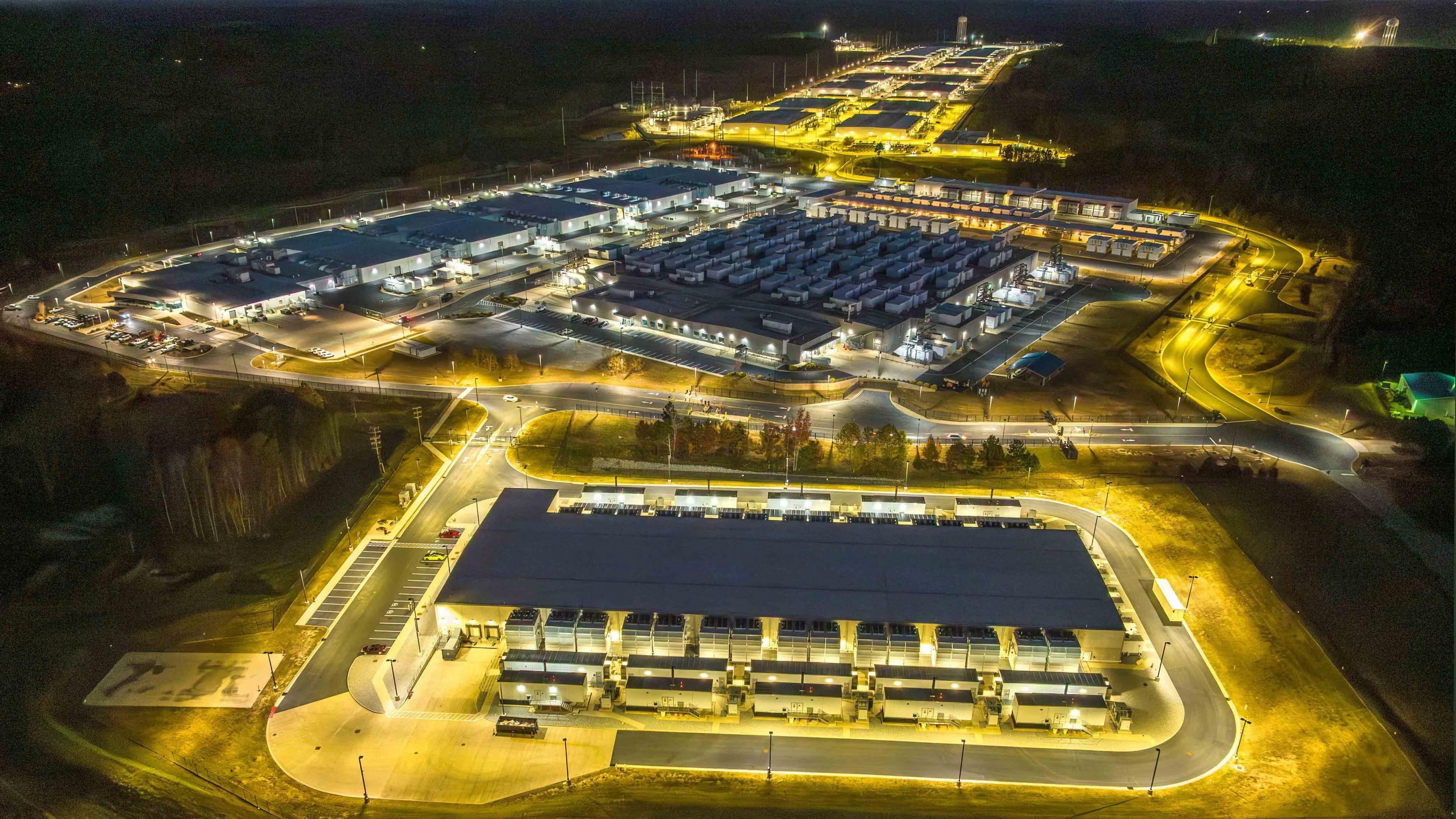
After assessing the various reasons for opposition to data centers, Wallace-Wells argues that there is a positive story to be told about the benefits of AI and data center projects but Big Tech has not been very effective in telling it. He concludes his column with a quote from an activist in Louisiana: “This is a fight about control. This is about who controls the future.”
In trying to tell the Big Story of data center resistance, commentators struggle to find the plot. The Trump Regime and their right-wing allies have fed the public many dark tales of alien invasions: Haitian immigrants eating peoples’ pets, foreigners sneaking into the country to rape and pillage, brown people secretly plotting to take over the country. As white people see their neighbors snatched by ICE agents from their homes and workplaces and taken to concentration camps, these dark tales are losing traction. The regime is losing control of its alien invasion stories.
Like a good sci-fi movie where the town people come together to understand the spaceships that have landed and figure out how to fight them, aliens often symbolize public anxieties over a world they inhabit but over which they struggle to have some control. Data centers are symbols of the billionaire class, the big capitalists and the big investors bulldozing and building their own vision of the future. Much like Trump’s gold appliquéd White House and monuments to himself signify an old empire in decline, monstrous windowless boxes that hold towers of interconnected computers symbolize something dead at the core of advanced capitalism.
And the story of the people versus the alien invaders is still being written.

Watch Full Film for Free
Atomic Bamboozle is documentary that follows anti-nuclear activists, tribal leaders, scientists and attorneys as they draw lessons from the decades-long campaign to shut down the Trojan Nuclear Power plant in Oregon and extend those lessons into a new struggle to stop small modular reactors (SMRs) from being built in the Pacific Northwest.
💬 Share Your Thoughts
What are the best tactics for opposing data centers? Are local moratoriums enough? What are the most effective storytelling strategies?