

Recently on KBOO Old Mole Variety Hour, Joe Clement and I discuss All That’s Left of You - a powerful film about a Palestinian family living through generations of the Nakba and Israeli occupation.
Through a mother’s account of her son’s death during a protest in the Occupied West Bank, the film explores family, generational trauma, grief, and the painful limits of parental protection. We also debate whether its appeal to shared humanity risks conceding too much common ground to the oppressor.
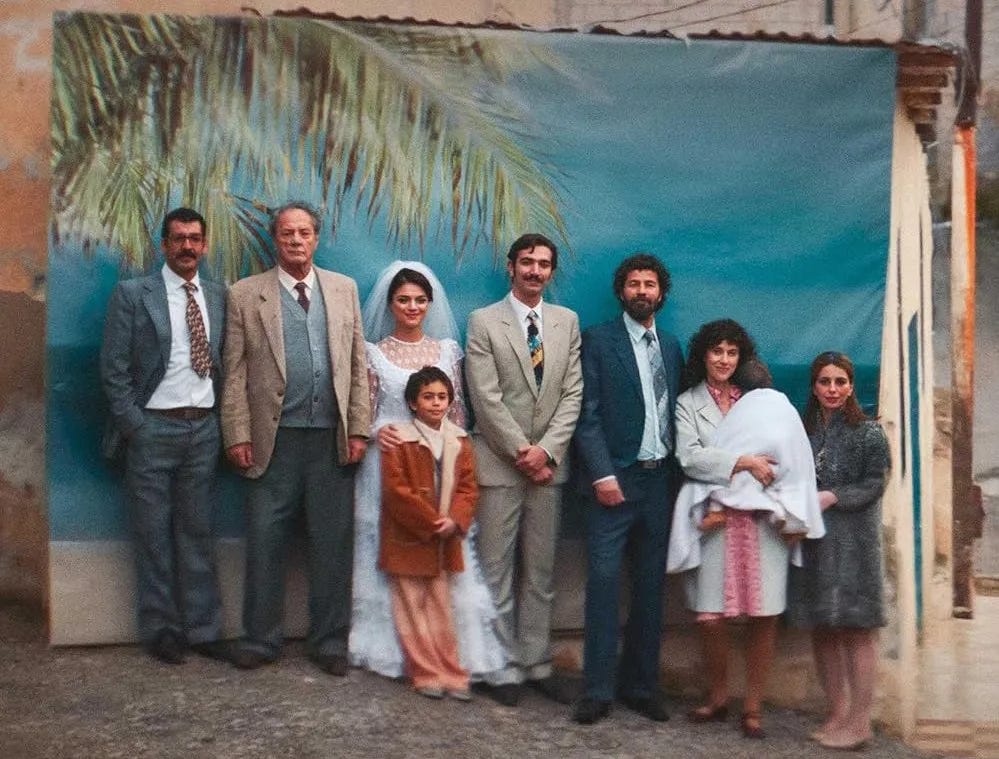
Joe:
All That’s Left of You is a 2025 film directed by and co-starring Cherien Dabis. The film follows one Palestinian family across four periods spanning virtually the whole seven decades long history of the Nakba, what Palestinians call the catastrophe of displacement, dispossession, and oppression by the Israeli state and Zionist movement. Starting in the 1980s, we encounter some teenage boys living in the West Bank who get swept up in protests that are part of the first intifada against the Israeli occupation.
When IDF forces start firing on the crowd, one of the teenagers, Nour, dies for cover in a car that is shot at. The film then cuts to Cherien Dabis’ character, Nour’s mother Hanan, addressing the Kama directly, saying, I know you are wondering why we are here. You do not know very much about us.
It’s okay. I’m not here to blame you. I’m here to tell you who is my son.
But for you to understand, I must tell you what happened to his grandfather. The story then cuts to events in 1948, and then 1978, 1988, and then 2023. In the first period, we meet Nour’s grandfather, an orange farmer, Sharif, in Jaffa, and a very young Salim, Nour’s father.
Their family is displaced by Zionist forces conquering Palestine. In the 1970s, Salim has grown with children of his own and works as a teacher. Nour is still very young, and one day when getting heart medicine for Sharif with Salim, they are caught out past curfew and terrorized by IDF soldiers who force Salim to say shameful things at gunpoint.
Nour resents his father for what he perceives as his cowardice, while also deepening his connection with Sharif, who still believes in fighting for Palestine. When we get to the 1980s, Sharif is dead, and Nour is a teenager. The first Intifada is around the corner, if not happening.
School has been closed because of the conflict, and Nour and some of his friends go to a protest. When Nour dives into a car to avoid gunfire, he’s hit in the head, but not killed. His parents then enter a truly Kafkaesque maze of bureaucracy and structural violence of medical care under apartheid.
They struggle to meet the requirements to travel to an Israeli hospital that can treat his injuries. But because it took so long, his condition worsens to the point that he cannot be saved. Salim and Nour wrestle with the morality of organ donation when the recipients are likely to be part of the population that seek to dominate Palestinians.
The imam they seek counsel with invokes the film’s title, All That’s Left of You, when appealing to the humanity that the oppressor cannot take away from us after they’ve taken everything else. One of the organ recipients is an Israeli boy, who we learn later when he grows up is the addressee of Hanan’s opening plea for an audience. This brings us to the final act, back in Jaffa, but in 2023.
Hanan reunites with Ari, who receives Nour’s heart, and discovers that he did not, could not participate in military service precisely because his heart transplant. Salim wanders his childhood neighborhood and tests the bona fides of the now locals they encounter. They end gazing at the sea together.
Now Jan, this was a really beautiful film, and one thing that is obvious from this summary, and then from many reviews, is that this film is all about the generational component, the relationship between generations, and just what happens in each generation. What was your take on this?
The Wounds We Inherit: Family, Trauma, and the Nakba
Jan:
Well, there’s an enormous literature, some of it taken up in films such as this, centered on intergenerational transmission of stories of suffering and trauma. And this was very much a patrilineal story. So it brings to mind psychoanalytic analysis of father-son relationships, where here the mother is an important kind of mediating presence. But it really is about fathers, whether they can be fighters and whether their sons can be fighters, or whether the fight is futile.
Part of what was important about this film, and how it departs from many of these stories of intergenerational transmission of trauma, is that trauma implies the transmission of impairment. Here we see a more complicated picture, where the grandfather’s losses are felt severely by his son, who is reduced in social class but a highly effective teacher. He’s learning to creatively live under occupation. He is clearly a gifted teacher, playful, and creatively engaging his son and other students on how to live under these terrible conditions.
But then, his own son has a different experience of him after this humiliating confrontation with the IDF. And it reminded me very much of how Freud tells a story of his own disappointment in his father, Jacob, as a boy, and many of the parallels between the experience of Jews under Nazism and the experience of Palestinians under Zionism. And one of those was seeing your father, who you respect as a mighty person, be reduced in this humiliating way before the oppressor.
Freud famously tells the story of his childhood, a formative, disturbing memory, where his father, Jacob, tells him about what a good life they have. They’re much better than they were under the shtetl. But then, as he’s telling this story, a man comes along and says, “Jew, get off the street’ and knocks off his hat.
Sigmund Freud remembers asking his father, well, what did you do? And he said, I got in the gutter, and I picked up my hat. And he remembered looking very differently at his father.
This is so much part of patrilineal stories–of ambivalence, identification with the power of the father, and then finding that the father’s power is crushed by a superior power. And there are many of these stories under patriarchy. But this one, you see most poignantly and tragically under the Israeli occupation and domination.
When a Father Can No Longer Protect His Son
Joe:
There’s a scene in the center of the film where Salim is going to the pharmacy, thinking that curfew has been lifted and it apparently has not. And he has Noor with him. And Noor is his son.
He is the youngest of this generational chain of Sharif, the grandfather. The father in the first generation, Salim, is the father in the second generation and Sharif’s son. Noor is Salim’s son. And they’re coming back, and they’re caught by some IDF soldiers who are saying, “what are you doing out past curfew?”
And Salim tries to negotiate with them. He’s like, hey, I didn’t know. And we’re just like a house away.
“Can you just let us go?” And the soldiers just decide to completely terrorize the both of them, telling Salim to go paint over this graffiti. And then Salim says, “okay, do you have paint? Are you really serious about this?”
They get angrier at him and decide that they’re going to find a way to really humiliate him in front of his son, which is to force him to say these horrible things about himself, but then about his wife.
Jan:
And part of that was threatening to kill him.
Joe:
Oh yeah, at gunpoint. At gunpoint. And it’s not just implicit.
They were holding a gun to his head and saying, do this or die. And he did what I would do as a parent in that situation, and I would comply. But Noor is watching this happen, and Noor is angry.
Noor is so angry that he defies the gun-toting soldiers in front of his father, who is now even more worried that it’s going to get him killed. But ultimately they survive, and that is because he follows their commands, which is to humiliate himself in front of his son and himself.
Jan:
And violating a very, very big taboo in many, if not most cultures, to call your mother a whore. And he had to say that himself. My wife is a whore.
And so it was a terrible violation of a taboo of protecting women and the mother of his son. And so in his own mind, he had, even under the conditions of the threat of his own life and his son’s, he had violated his own conscience and suffered enormous depression and guilt over this, as well as the humiliation of his son seeing him reduced in this way.
Joe:
His son also has a visceral response to this, not just on the level of what he thought his father should do, but he acts out in school, he’s depressed, everyone notices this.
Jan:
And he’s angry.
Joe:
He’s angry.
Jan:
He’s picking fights. And part of his reaction, the father has been so able to create this world through his education, through what he inherited of the Palestinian culture and love of education. He’s a well-read person and has been able to create this kind of sanctuary for these kids under this horrific occupation but yet can’t do it anymore.
And the son discovers the limits of his father’s protective arms. And I think that’s part of the universal appeal of this film, is that all parents, even in relatively privileged conditions, realize that your children are entering a world where you can no longer protect them. And they’re facing forces beyond our reach.
And so Palestinian parents feel this just so profoundly and brutally that it’s agonizing to watch it.
Joe:
And yet, it also reminds all of us, I think, of what we face in our own lives, if we’re parents, or if we’re the children of parents, which is actually all of us, that we look up to these caregivers as creating absolute safety for us. And then eventually, we realize that that is not what’s really going on, and that life is much more fragile. And our parents’ ability to protect us is a lot more limited than we ever thought.
Jan:
Yeah, and you say parents, but I think that, you know, this is a Palestinian woman director. She opens with a woman, the mother speaking to the audience, and then the mother’s voice comes in at the end. The mothers are not the primary protagonists in this struggle against the occupation. And in a way, as Saleem suffered this terrible humiliation in front of his son, he’s kind of the victim of his own patriarchal honor, because he cannot speak of it to his wife.
He can’t enlist her. The boy turns to her for comfort, but he doesn’t explain to her what happened. He’s like, you shall not speak about it.
You shall not ask about it. He’s just so disappointed in his own eyes that he’s kind of internalized something of an identification with the oppressor in the sense of what it means to be a man, and being able to fight as a man. And if he had been able to talk with his wife, because she clearly played this important mediating role, you can imagine that she would have been able to explain something to the son that would have been helpful, although it’s hard to imagine anything at that point that could have reduced the destructiveness of what was happening.
Joe:
Yeah, it might not have taken it all away, but I think that it would have definitely taken the edge off, and it would have maybe allowed Noor to integrate some of that experience without then having this long-standing resentment for his father.
Beyond Trauma: What Survives the Violence
Jan:
There’s also the interesting relationships between grandfathers and grandsons. I mean, the daughters were not so much part of this patrilineal transmission of storytelling and ways of understanding the world, but the grandfather had dementia. The doctor said, “well, maybe that’s God’s way of extending grace to old people.”
He doesn’t have to remember how horrible things are right now, but he did remember what had happened when he lost that orange orchard, and when his family was dispersed, and he was himself defeated by the Zionists. But he had kept some of that struggle that he transmitted to his grandson. So the old couple at the end say, “you know, we can’t control how Noor thinks or what he’s going to do. He’s going to find his own way.”
And, of course, we all are shaped not only by our parents and familial influences, but by the historical forces, captured by history, too. And he was very much, you know, shaped by that first intifada.
Joe:
Yeah, I think that part of what allows Sharif to hold on to some of that spirit and impart it to Noor is the fact that his humiliation and defeat happens off of the scene of the family viewing. Early in the film, after bombardment leads the mother to want to take the kids to live somewhere else, Sharif stays behind, insisting on defending the farm and otherwise working with the town locals to negotiate what comes next. And obviously, that doesn’t work.
You can’t negotiate with conquerors. He’s humiliated and sent to a prison camp, and no one knows where he is until he shows up months later where his wife had taken their kids. And while there was defeat and while there was displacement and trauma from that, that specific encounter between the conqueror, the oppressor, and the oppressed was not on full view for Salim and his brothers and sisters.
And so, in a way, Sharif was saved the shame of them really knowing what it was like and what he lost in the face of what he thought he could actually do for them. And then he connects with Noor and basically imparts this nationalistic spirit of we can’t give up the dream of we were free before and we can be free again. And Noor, experiencing the reality of oppression firsthand, is far less able to turn to his father for any sense of authority and agency in the world that he saw his father completely robbed of.
Making Space for Grief in Palestinian Cinema
Jan:
Yeah. This is Jan Haaken and Joe Clement talking today about the Palestinian film, All That’s Left of You. Wonderful film.
I’d like to talk too about this film as grief work in the context of what is really a golden era of Palestinian films. I’ve now shown The Palestine Exception, a film I made with Jennifer Ruth at, I think, four Palestine film festivals around the world, including in the U.S., as well as other settings. It’s also part of Watermelon Pictures releases.
And there are a lot of films just about the scale of destructiveness inflicted on the Palestinian people, where there is a palpable anger and outrage that courses through the film and a call for action. But this has a much quieter tone, more of grief and a weary mother at the beginning. And then we return at the end to her weary face appealing to us as an audience.
And we learn at the end that she is appealing to this Jewish-Israeli man who’s received the heart of her son after his death. I think it’s so important to acknowledge how much people who are oppressed often are denied the experience of grief. You know, you saw during the Vietnam War, earlier periods of imperial wars against people, that no empathy for the people who’ve lost their sons and daughters, children lost on the other side.
For an international audience, the film shows how grief is universal. It speaks to parents and under other conditions of vulnerability. That’s part of what the Palestinian cause represents to people, not only the refusal to be defeated, but insistence on a space to grieve. And at the same time, the film, I think, because that was maybe the vision of it, it really pulled back on any real exploration of the intifada.
The son, Noor, just fleetingly enters the scene angry, and then he’s basically killed. But that was part of, I think, the mission and the bargain of the film. It doesn’t take you into anything terrible or uncomfortable as an audience or confrontational. In fact, she says, “I don’t blame you” right away at the beginning.
And it’s only the mother who could say this. The sons and the sons of sons, Palestinians, are less in a position as the mother is to be so comforting. But I wondered, you know, is it a little too consoling of the oppressor in kind of winning people over on the basis of a shared humanity that this Jewish Israeli young man has the heart of his son?
She says to him, “I hope you know you have Palestinian heart.”
Shared Humanity - or Too Much Comfort for the Oppressor?
Joe:
Yeah, I think that it’s wagering that part of the struggle has to be addressing how numb we have become to oppression, to genocide, that so many images and stories about what is happening. They’re overwhelming, they shut us down. And the film is trying to show the depth of some of that tragedy and horror, but in a way that is trying to be mindful of how easy it is to shut down.
And so it is being careful to invite us with an open heart, which means disarming the defensiveness that we have when we think that we are on the other side somehow.
Jan:
Yeah, and does so beautifully. I mean, it just in terms of the quality of the film, the acting, how the filmmakers handled the aging of the actors. I mean, it’s a first rate film just on those terms, but also is very educational for people.
I mean, it is about the history of the Nakba and it makes decisions about touchstone years, telling it through this device of the family story that is part of its universal appeal. I mean, I can’t recommend it enough. I think even watching the second time, you know, I learned more and found it even more gratifying because you know the general storyline.
That’s why I think you’re reading the story at the beginning, the plot was important to orient you. And then as you watch it, the richness of it and the layers of family experience that are passed on how much the world has to learn from the Palestinian people, even at tremendous cost to their own lives.
Joe:
Yeah, as Cherien Dabis opened saying, “you don’t know much about us. And I don’t blame you.”
Jan:
I do. I think we have a lot of blame for not knowing more. And maybe especially now.
But you’re right, it was a way of reducing the defensiveness of the audience. But I would say, j’accuse! We are guilty here. But it is very effective at drawing you in.
And there are a lot of films that hopefully will continue to be made, along with this wonderful film. And it comes out of the Palestinian diaspora too. So watch it on Watermelon Pictures as well as seeing many, many other beautiful films on Watermelon Pictures.
🎞️ Watch Official Trailer

💬 Share Your Thoughts
Do you think the film’s emphasis on shared humanity makes its message more powerful? Or does it risk softening the realities of oppression? Can grief itself become a form of resistance?