

Melancholia is a term associated with depression. But the term predates modern psychiatry and its medicalized typologies. As a signifier circulating more widely in cultural studies than in psychiatric journals, melancholia has found a respectful place in political discourse on the affective side of politics.
Left theorists invoke melancholia in describing the pervasive malaise that often characterize left-wing movements during reactionary periods. In History and Freedom: Lectures 1964-1965, political theorist Theodor Adorno addresses the depressive emotional currents of left-wing culture. For Adorno,
“This is a melancholy that has become active, not a melancholy that makes do, that remains stuck in an unhappy consciousness, not at home with itself, but a consciousness that exteriorizes itself as critique of existing phenomena.”
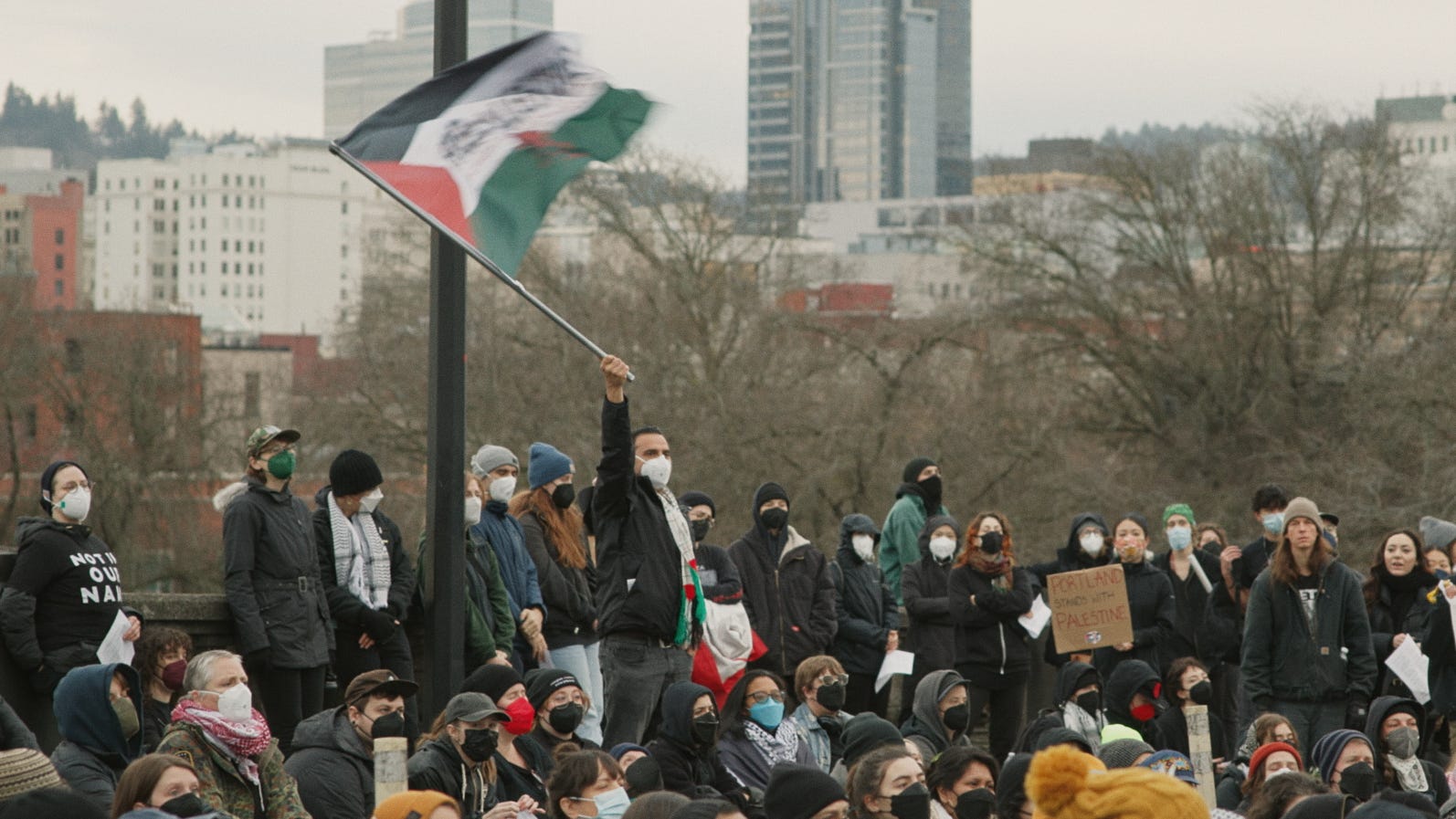
In joining campus screenings of The Palestine Exception, directed by Jennifer Ruth and me, I am often asked to speak as a clinical psychologist to students’ feelings of distress. Student activists describe feeling traumatized and suffering from symptoms of PTSD in the wake of punitive actions on the part of their universities. The sense of joyful community and revolutionary possibilities that accompanied the encampments and occupation of buildings in 2024 have given way to states of depressive defeat. For students from more protected backgrounds, there is often a sense of shock. How could these administrators, positioning themselves in their own PR as in loco parentis, beat up on young people on their campuses?
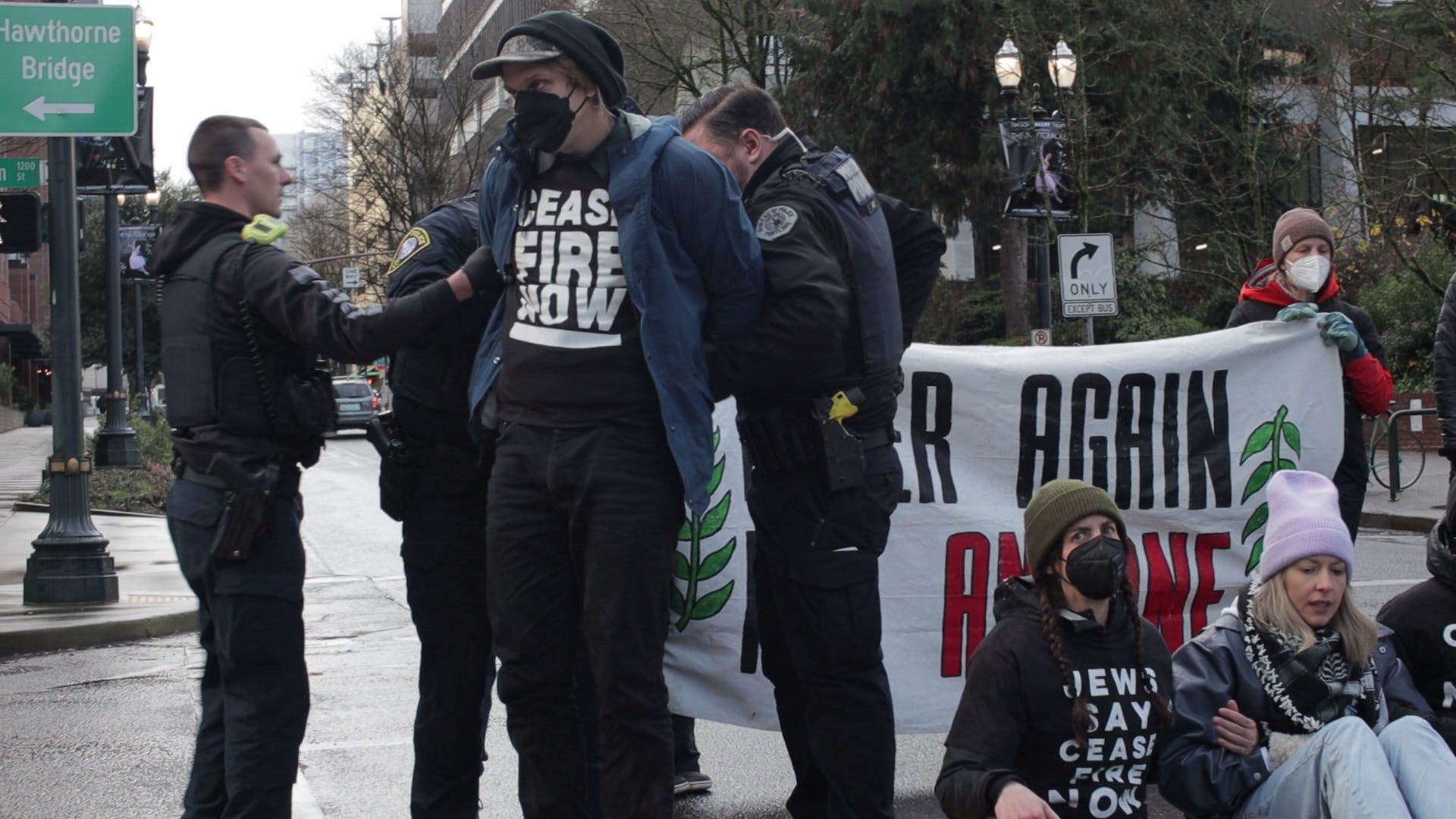
Taking on the power of pro-Israel board members in their schools and pro-Israel lobbies in liberal politics, including the Democratic Party, exposed these students to the brutality of administrative authority in ways many had never experienced.
Responding to students’ distress, I sometimes suggest that the group mood seems melancholic rather than traumatized or depressed. Trauma and depression are part of a clinical vocabulary of emotional impairments and mental disorder. Melancholia, on the other hand, is a more dynamic state of mind. Assaults on shared moral purpose and political agency do hit hard emotionally. And in realizing the power of oppressive forces to crush resistance, activists must face the necessary process of gathering up and holding the ideals and forms of solidarity that have made Gaza a moral compass for our era. This is a form of melancholic work.
Political theorists such as Wendy Brown and Judith Butler, along with Frankfurt School theorists Walter Benjamin and Adorno of generations prior, have contributed to a rich literature on left melancholia. While most of these theorists depart in critical ways from psychoanalytic readings, they all make use of Sigmund Freud’s Mourning and Melancholia as a touchtone text. Freud wrote this essay toward the end of the First World War and his clinical thinking carries the emotional weight of the War’s large-scale death and destruction. For Freud, psychoanalysis offers insights on grief as a necessary human capacity as well as on how grief takes regressive or pathological forms.
Freud distinguishes between normal mourning and melancholic depression: the “inhibition of the melancholic seems puzzling to us because we cannot see what it is that is absorbing him so entirely.” The melancholic (the depressive), unlike the mourner, refuses to accept the reality of the loss. This psychological work that eludes observation—the internal work that “we cannot see”—centers on protecting an internal representation of the beloved lost object (a person, an ideal, a movement) while modifying in some way the relationship of the self (or the group) to that object. The mourner, according to Freud, must eventually accept the loss and reinvest their motional energy in new attachments. The melancholic refuses the finality of the loss and intensifies emotional investment in the lost object. The melancholic remains in a state of unstable revolt against what Freud terms the “reality principle.”
A range of political theorists have drawn on Mourning and Melancholia to frame the disturbing emotional states that follow in the wake of crushing political defeats. Nouri Gana’s recent book, Melancholy Acts: Defeat and Cultural Critique in the Arab World enlists psychoanalysis in arguing for the centrality of melancholic loss to Arab subjectivity and politics. In his analyses of recurring motifs in Arab films, short stories, plays, and poems, Gana defends melancholy as the only ethical and political orientation to the persistence of loss into the present. The ethics of these works center on a refusal to accept the oppressor’s demands for closure, for burying ideas and ideals along with the dead. Unlike post-traumatic stress conditions, there is no “post” for people suffering ongoing violence and displacement. And unlike assertions of postcolonial conditions in the Arab world, there is no postcolonial genuine sovereignty.
The American left has tended toward manic reactions (Fight! Fight! Fight!) in fending off dark moods. In “Resisting Left Melancholia,” a 1999 essay written by political theorist Wendy Brown, melancholia is framed as a pathological political symptom. She diagnoses the problem as centering on leftists’ tendency toward narcissistic identification with past historical possibilities. She draws on the work of critical theorist Walter Benjamin who similarly diagnoses melancholia as a political pathology. “Left-wing melancholy” was the title of an essay written by Benjamin in 1931 for the German newspaper Die Gesellschaft. The left melancholic, from the perspective of Benjamin, retreats into a narcissistic fixation on a dead past. Speaking to different periods of political reaction, Brown and Benjamin frame political melancholia as regressive. It is a conservative backward-looking stance, more attached to cherished ideas than to the world of living struggle.
Peter Gordon takes up the emotional toll of left defeats while offering an analysis more in line with Adorno. In “Why the left needs melancholy,” Gordon begins by noting that melancholia is a mood of defeat.
“In the face of so much suffering and injustice,” he insists, “the melancholic’s refusal to move on with business as usual already bears within itself a kind of resistance, a recognition that all is not right in the world and that something must be done.”
In A Politics of Melancholia, authors George Edmundson and Klaua Mladek suggest that the revolutionary potential of melancholia lies in how we understand the place of loss and grief in movements of resistance. The conservative melancholic refuses to relinquish an idealized representation of the past. It is backward looking. What the authors term the “political melancholic” refuses to give up on a vision of the world that has not yet been realized. It is a world that has been imagined and fought for under conditions that make it seem an impossibility.
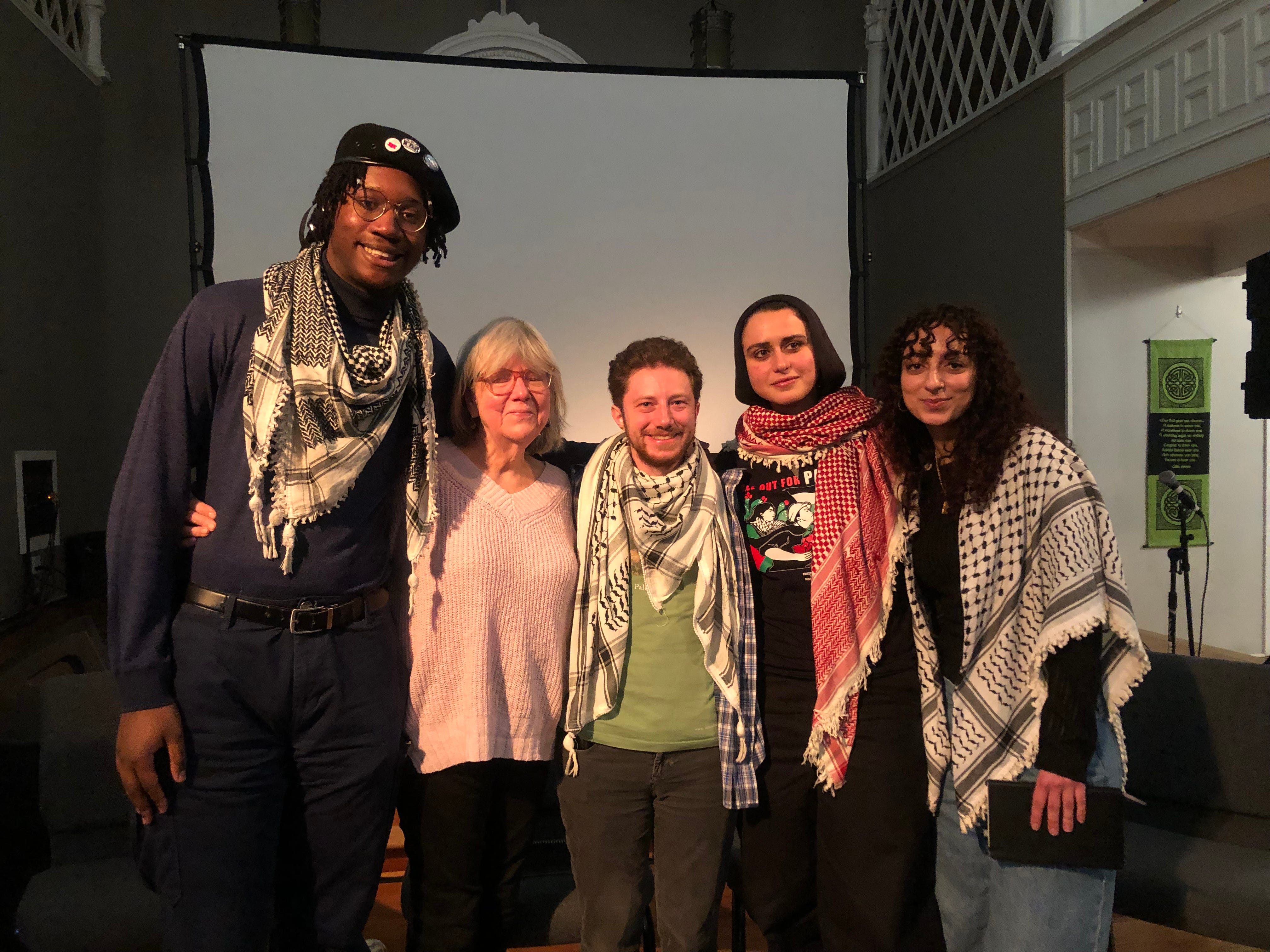
There are no immediate antidotes for these melancholic currents in left politics. The challenge for activists is in developing practices that acknowledge and positively value the range of affective currents that accompany long-term struggles. As one of the students offered in our post-screening discussion, “We did not know how hard and long this fight for Palestinian freedoms would be and how much it is part of larger systems of oppression.”
My response, which I often offer to young activists, was to point out that they have rich legacies of struggle to draw on. Oppressed people have found creative ways to resist and to hold onto connections to land and identity, even in the face of genocide. Gaza makes moral claims on all of us to resist. If Palestinians refuse to accept the conditions of their subjugation, then we in solidarity must refuse as well.
I close with a poem written by the late Gazan poet Refaat Alareer shortly before his death. It’s titled “If I Must Die.”
If I must die,
you must live to tell my story
to sell my things
to buy a piece of cloth
and some strings,
(make it white and long)
so that a child, somewhere in Gaza
while looking the heaven in the eye
waiting for his dad who left in a blaze—
and bid no one farewell to his flesh
not even to himself—
sees the kite, my kite you made, flying up above
and thinks for a moment an angel is there
bringing back love
If I must die
let it bring hope
let it be a tale.

“The Palestine Exception is a searing and unflinchingly honest account of what it means to stand for something, and the immense consequences of speaking up. This is a vital documentary for our present moment, but also a terrifying look at how institutional power has always tried – and will always try – to enforce silence on every last one of its critics.”
Omar El Akkad, author of One Day, Everyone Will Have Always Been Against This. Winner of National Book Award
Thank you, Jan, for this enlightening article. I had not thought about melancholia in this way—as a dynamic, possibly forward-looking mental state in political activism; a refusal to acquiesce in defeat; a positive response to a pervasive sense of failure. It deepens my understanding of the main characters in my upcoming novel, In the Hands of the Other (Vine Leaves Press, October 2026). Set in Gaza in 2005-6, the story is about a political kidnapping and the relationship that develops between hostage and hostage taker. It is a story not just about failure, but even more so about a more defiant notion of it, i.e., melancholia. Never too old to learn.