

There’s a clever meme that has gained traction as signifier of the rich and powerful men who operate in a corrupt world of practices outside of the laws and moral codes governing everyday people. It’s the Epstein class. A March 2nd In These Times article on the Epstein class notes that, “He was an equal opportunity fixer. He was just as friendly with liberals as he was with conservatives, including Summers, Clinton, and disconcertingly for the American left, Noam Chomsky. For elites like Epstein, ideological differences were superficial. The real distinction was money, power, and connections.”
How do we understand the place of Noam Chomsky, one of the most revered intellectuals of the American left, and his place in this dark labyrinth? And is it the case that ideological differences or principles mattered little in resisting the seductive powers of Epstein?
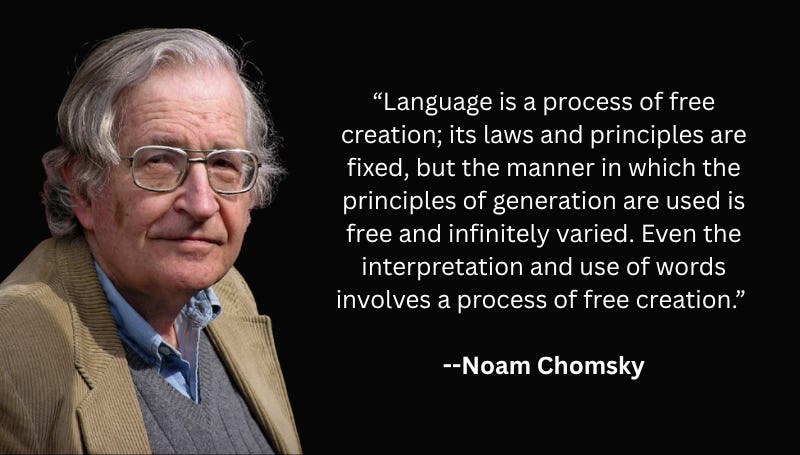
As leftists, as well as people who are trying to understand Epstein’s monstrous network, what grace do we grant this old man who at the same time was seemingly in control of his powers late in life? He suffered a massive stroke in 2023 and now is reportedly incapacitated and living in Brazil where he and his wife Valeria Chomsky own a home. She speaks for him now during his debilitated state. But up through his early 90s, Chomsky remained mentally sharp and publicly active.
Disbelief, grief and outrage course through many indie news sites and podcasts as admirers of Chomsky struggle to make sense of revelations of the longstanding and close relationship between the two men. In the released files and email correspondence, there is nothing suggestive of sexual impropriety, no underage girls, no apparent sexual favors. But there was a kind of pleasure economy operating here even if it was not sexual in nature. As a feminist psychologist, I wanted to go beyond the sensational quotes available online and trace the course of this relationship through their correspondence over a number of years—a correspondence available through jmail.world—a brilliant research tool created by several techies at MIT. The site allows viewers access to Epstein’s personal emails.

Some defend Chomsky the same way that others in the Epstein class defend themselves: He didn’t know how vile Epstein was; he was manipulated by a masterful con artist; he was exploited during an emotionally vulnerable time in his life. Valeria Chomsky released a statement in February 2026 claiming that she and her husband were taken in by Epstein and that they were “careless” not to have thoroughly researched his background.
All of this feels quite lazy and inadequate.
The Linguist Takes on the Behaviorists
Before offering my psycho-analysis of this relationship, ruminations over how to think about it brought to mind memories of how I first learned about Chomsky and became an admirer. It was not in his political theorizing but through his interventions in psychology.
When I joined the psychology faculty at my university in 1980, Chomsky provided an arsenal of arguments to counter the operant behaviorists—the Skinnerians—that still dominated my discipline. I joined the faculty as a feminist psychoanalytic clinician with philosophical interests and an aptitude for attending to the practical tasks of the department. Early on, I found favor with my colleagues through lively intellectual repartee in the department’s conference room. The psychology rat lab on the fifth floor of Cramer Hall was still the epicenter of experimental research but the old paradigms were under strain.
In the famous debates between B.F. Skinner and Chomsky in the 1960s, the intellectual referees I followed called it in favor of Chomsky. He laid out early formulations of what he became most famous for as a linguist—his theory of universal and generative grammar. The theory became more abstract over time. But in that early counter to the behaviorists Chomsky’s model of language exposed the impoverishment of the behavioral models with their blank mental slates.
A Feminist Eye
Years into my academic career, I began to look at Chomsky’s theory of language with a more critical eye.
One memorable scene comes to mind. In Chomsky’s celebrated debate with Michel Foucault in the 1980s, Chomsky lays out what he views as the evidence for complex innate mental structures relatively independent of the influence of culture. “A person who is interested in studying languages is faced with a very definite empirical problem,” Chomsky asserts.
What is this empirical problem? Chomsky goes on to explain that the core scientific problem is “that of accounting for the gap between the really quite small quantity of data, small and rather degenerate quantity of data that’s presented to the person, to the child, and the very highly articulated, highly systematic, profoundly organized resulting knowledge that he somehow derives from this data.”
What is he saying here? The “degenerate quantity of data presented to the child” reflected Chomsky’s disregard—intellectually and emotionally--for the complex and sensuous surround of this world of the child.
Language for Chomsky was an internal affair and only indirectly related to social connection or culture. Imbued with Rousseauian romantic currents, Chomsky argued that humans are innately wired for creativity and freedom and that human realization centers on casting off the repressive constraints of capitalism and state structures. One can read in Chomsky echoes of Marx’s early theory of species-being and alienation as well—how capitalism estranges workers from their very nature as creative social beings. Chomsky’s increasingly abstract linguistics became a kind of defensive, intellectual edifice, however, disconnected from the messy currents of life. It confessed to a certain autistic way of thinking.
The Development of a Friendship
In the months before Epstein’s death in jail in 2019 Chomsky emails his friend to say that Valeria “is putting together documentation about the matter that I can use in a case around the children.” Chomsky’s adult children had expressed alarm over how funds in an estate set up through his deceased wife were being transferred to a marital fund for Chomsky and his new wife 35 years his junior. Noam and Valeria had sought Epstein’s counsel as someone with acumen in managing delicate financial problems.
And then Chomsky turns to Epstein’s own mounting problems in a passage widely cited and condemned in online discussions:
“The horrible way you’re being treated in the press and public, what the vultures dearly want is a public response, which then provides a public opening for an onslaught of venomous attacks, many from just publicity seekers or cranks of all sorts…That’s particularly true now with the hysteria that has developed about abuse of women, which has reached the point that even questioning a charge in a crime is worse than murder.”
Beyond the glib tone of this email, Chomsky endorses the excessively defensive reactions associated with right wing men.
During this same period, Epstein offers: “You can stay in my apartment in New York as long as you live.”
Phases of an Intimate Relationship
In reading many hundreds of these email exchanges that took place from 2012 until just before Epstein’s death in jail in 2019, I noticed patterns that suggest phases in the development of their relationship. There was the courtship phase, then the challenges that produced a form of working alliance between them, and a later phase of renewed commitment and vows of their enduring bonds.
Close friends, much like romantic couples, often go through such phases. Epstein began his courtship of Chomsky in 2012 –a phase that continued over several years with Jeffrey’s regular offerings of gifts, dinners and visits to his many homes, interspersed with intellectual games and playful exchanges on topics of mutual interest. There were giddy expressions of affection on the part of both Epstein and Chomsky, joined by Chomsky’s new wife Valeria after they married in 2014. Emails are laced with Epstein’s frequent offers of sumptuous retreats and exciting dinner parties. The courtship between the two men extended early on to Valeria—a kind of third term in this bromance.
In 2015, the relationship turned to decidedly serious personal matters. On Feb 2015, Jeffrey writes to Noam. “I think we should set up the foundation so that valeria [sic] is taken care of if something were to happen to you…you can count on my help. but let’s not wait too long.”
The joyous meetings and playful emails of the courtship phase shifted to what clinicians often term the working alliance. Couples face life challenges and find out whether their capacities and interests are sufficiently aligned to continue on the road ahead. This opened a period of consultations that continued through 2019 on Chomsky’s tax issues and a lawsuit from Chomsky’s children that centered on claims around their father’s assets. Epstein regularly advised the Chomsky’s on legal and financial countermoves and how to protect their assets.
From the courtship phase through these somber consultations, we can see a consistent stylistic through line that Epstein adopted. It was notable in his other email correspondence but quite pronounced with Chomsky. Epstein would pick up a fragment of an idea, an element of Chomsky’s theorizing, particularly around generative language and linguistics where Chomsky’s influence was waning.
From November 2018, Jeffrey writes (verbatim from email): “What I’m suggesting is that what the term culture means is the same as what consciousness means. Culture can be described as Russell did for consciousness, the physics and math envy habit of trying to reassure things. We experience culture at a stubborn, transmitted, localized, contains memories, boundaries, dictum.” And so on.
Epstein’s intellectual overtures are stream of consciousness with many typos and sentence fragments. It was as if the restless mind of this would-be genius can’t settle down enough to keep up with the mundane task of writing. He is always flying somewhere and meeting interesting people. This frenetic, cryptic style of correspondence gives Epstein a kind of intellectual cover.
In his responses, Chomsky would gather up/cover up the fragments, often reframing what psychiatrists would call a “word salad.” And Chomsky expressed deep appreciation for Epstein’s brilliant insights.
In February 2018, Chomsky writes to Epstein, “Can’t thank you enough for what you did on this (advice on handling the legal problems with his children) -- a very small fraction of what we have to thank you for, by no means least, in fact most, just the gift of friendship over these years. And now off to prepare a class later today on the impending end of civilization.”
Indeed, in a character reference letter written on behalf of Epstein somewhere around 2017, Chomsky ends with lavish praise: “the impact of Jeffrey’s limitless curiosity, extensive knowledge, penetrating insights and thoughtful appraisals is only heightened by his easy formality without a trace of pretentiousness. He quickly became a highly valued friend and regular source of intellectual exchange and stimulation.”
As Epstein coached Chomsky and his wife on their legal moves, Chomsky was advising Epstein on how to manage his own public relations problems. So this letter by a dear old man who is presumably bamboozled by this con artist grew from commitments made over an extended period of time that overlap with growing public knowledge of the seriousness of Epstein’s crimes.
The Ties that Bind
The centrality of Epstein’s ability to procure girls and young women for wealthy men can blind us to a recurring undercurrent in this sexually exploitive, misogynist world. The girls and women on display did grant these men a form of uber-class status. But their presence—too young or vulnerable to assert any real agency-- allowed for the free expression of homoerotic bonds as well. The exchanges around sex take on the tone of anxious immature boys. Girls and women are mere fetish objects in Epstein’s world. (Note: Freud developed the psychological concept of the fetish around this form of masculine anxiety and fear of women’s bodies. The boy or man fixates on an exciting part—a shoe, a foot--as a defense against the whole of what woman represents.)
Chomsky apparently did not partake in the sexual predations offered by Epstein. But he confesses to fantasies of Epstein’s island paradises. On Jul 13, 2016 Chomsky wrote: “All continues to be very tempting. One thing we’d very much like to work out, if it’s possible for you, would be a visit to the ranch. Don’t know if we told you but we’re planning a longer stay in Tucson over the winter, January-February. Would that work? And that Caribbean island is particularly tempting.”
In the course of couples counseling, the therapist often turns to how the two people met and what drew them together. For many of us as clinicians, we listen for fantasies and unconscious desires that can be part of the field of attraction.
And so in closing, I turn to the first emails between Chomsky and Epstein. It was March 30th, 2012, and it started with Lawrence Krauss asking Noam if he would like to be introduced to Jeffrey. Krauss himself had been accused for close to a decade of sexual misconduct by students and fellow faculty members (situations for which he had sought Epstein’s advice). Chomsky stood by his friend saying he had no knowledge of any inappropriate behavior.
Krauss writes: “If you are willing, is there anyone I can have him (Epstein) contact to set up an appointment? I will owe you. He is an interesting fellow in any case.”
Noam responds: “Just suggest to him to write to me. It’s a Sunday, I think, so it won’t be when I’m at work.”
Lawrence replies: “You are in. He will meet with you. You of course owe me big time now. I was hoping I would get him out to Arizona for our deception [sic] meeting. So all I got out of the email was a meeting for you. Enjoy. Lawrence.”
This was before the troubles with his children were on the horizon and before the new wife. There was something Noam was to enjoy here and something that would be owed through this meeting.
In conclusion, I would say that as important as Chomsky has been as a left scholar, he is no friend to feminists. This kind of willful blindness and what Valeria Chomsky describes as their “carelessness” do matter.
After spending many days reading these emails, I was left with a sense of disappointment and disgust but not with the crushing loss of a hero. As feminists, we may be less vulnerable than our male comrades to over-idealization. We have had to collectively work through our daddy issues.
Like many, I had admired Chomsky as a political figure and writer. In his later years, while he was teaching at the University in Arizona, he espoused "renewabels" as a solution to the harms caused by fossil fuel. I sent him a note asking that he consider the research and writing of Ozzie Zehner, along with a cc of Zehner's book, "The Dirty Secrets of Clean Energy and the Future of Environmentalsim" It is thourougly annotated using credible arms-length sources. Chomskys' response was dismissive. I now saw Chomsky as arrogant, unable to consider any evidence, no matter how credible, that might challenge his thinking/opinions. As for his connections to Epstein that began with Chomsky's attempts to subvert monnies intended for his children deserves more scrutiny in my mind. I must ask: what kind of person is the parent who would even consider this?
This is an excellent reflection by a feminist psychologist anchored in feminist values for feminists holding similar values. I have found some feminists who stay within their subset of human values and some who bridge with other subsets to discover and unite in commonalities. I will be interested to see which comments stay within this subset and which bridge into commonalities. Either/both ways, this article inspires rich thought and self-reflection for me.